The world of precious metals has long captured the attention of investors seeking a hedge against economic uncertainties. Among these metals, gold and silver have been revered for centuries not only for their aesthetic appeal but also for their role as storehouses of value. One intriguing aspect that often takes center stage in the precious metals market is the gold-silver ratio.
Understanding the Gold-Silver Ratio: The gold-silver ratio is a metric that reflects the relationship between the prices of gold and silver. It is calculated by dividing the current price of gold per ounce by the current price of silver per ounce. This ratio acts as a barometer for investors, providing insights into the relative value of these two metals at any given time.
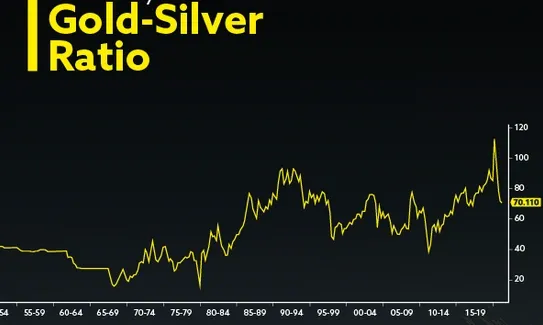
Throughout history, the gold-silver ratio has exhibited fluctuations influenced by various economic, geopolitical, and market factors. Traditionally, the ratio has hovered around 15:1, meaning it took 15 ounces of silver to buy one ounce of gold. However, in modern times, this ratio has expanded, often reaching levels well above historical averages.
Several factors contribute to the dynamics of the gold-silver ratio. Supply and demand fundamentals, economic indicators, geopolitical events, and shifts in investor sentiment can all play significant roles. In times of economic uncertainty, investors may flock to gold as a safe-haven asset, causing the ratio to widen. Conversely, during periods of economic optimism, silver – with its industrial applications – may outperform gold, narrowing the ratio.
The gold-silver ratio is a tool that investors use to make informed decisions about their precious metal portfolios. A higher ratio may suggest that silver is undervalued relative to gold, potentially presenting a buying opportunity for silver enthusiasts. Conversely, a lower ratio may indicate that gold is relatively more attractive, leading investors to favor the yellow metal.
Traders often analyze the gold-silver ratio to develop strategies for profit in the precious metals market. Some engage in pair trading, taking advantage of divergences in the ratio by simultaneously buying one metal and selling the other. Others use the ratio as an indicator to time their entry and exit points in the market.
The gold-silver ratio is a dynamic and fascinating aspect of the precious metals landscape. While it doesn’t provide foolproof predictions, it offers valuable insights into market trends and investor sentiment. Whether you’re a long-term investor seeking stability or a trader looking to capitalize on short-term fluctuations, understanding the gold-silver ratio can be a valuable tool in navigating the intricate world of precious metal investing.